Pickett Engineering
Turtles All the Way DownPickett Engineering is a major construction firm whose stalled sewage-control project and alleged bribery place the company at the intersection of civic infrastructure, environmental harm, and the mystery of Russell Pickett’s disappearance. In Aza Holmes and Daisy Ramirez’s investigation, the firm is more than the setting of a wealthy family’s scandal: its public contracts help explain why the White River remains polluted, while the criminal inquiry gives the missing CEO’s case its stakes.
Corporate scale and reputation
An Indianapolis-based company employing more than ten thousand people worldwide, Pickett Engineering is described in news coverage as one of Indiana’s largest employers. Its scale gives the disappearance of its CEO a public dimension: the search is not solely a private family matter, but a story about a powerful business and its place in the state’s economy. A radio report announces a $100,000 reward for information leading to Russell Pickett’s whereabouts, making the company’s resources and the missing executive’s identity immediate to Aza and Daisy.
The newspaper research Aza undertakes also presents a record of repeated legal disputes. Coverage of Russell Pickett includes a large downtown real-estate deal that ended in multiple lawsuits, sexual-harassment suits brought by his former executive assistant and the company’s chief marketing officer, and a suit by an estate gardener alleging violation of the Americans with Disabilities Act. These are reported allegations and lawsuits, not findings detailed in the account. Aza finds that Pickett had resolved the listed cases through settlements, but that history did not make the separate criminal investigation disappear.
The sewer project and the White River
The company’s most consequential public work in the evidence is a long-running effort to reduce sewage entering the White River. Fifteen years before Aza’s research, the government set aside funds for additional sewage-retention pools and an expanded tunnel system beneath downtown, intended to divert Pogue’s Run. The stated aim was to stop rainstorms from causing sewer overflows into the river within a decade. This was infrastructure with an everyday environmental purpose: to change what happened to the city’s waste when it rained.
Pickett Engineering first received the contract, but did not complete the work, and the project went substantially over budget. The government then withdrew the contract and opened the remaining work to other bidders. The failure therefore had two linked consequences: the planned improvements remained unfinished, and the company lost the original contract before later re-entering the competition. The novel makes the cost of that delay tangible through the White River, which Aza recalls as beautiful in its surrounding wildlife but polluted by sewage. Her description distinguishes the river’s visible natural setting from the condition of its water, grounding a city-scale infrastructure failure in a place she once visited with her mother.
The renewed contract and investigation
Despite its earlier failure to complete the project, Pickett Engineering won the replacement contract. Aza’s research indicates that the company did so by bribing state officials. The account links that alleged corruption directly to the public work: the renewed award was not simply another construction contract, but part of an investigation into whether officials had been improperly influenced in the allocation of a project intended to address sewer overflows.
Two company executives had already been arrested and were believed to be cooperating with police. Russell Pickett, by contrast, had not yet been charged when he disappeared. An Indianapolis Star editorial published three days before his disappearance argued that there was enough evidence to indict him and questioned why the authorities had not done so. The contrast between arrested executives, a still-unindicted CEO, and a public demand for action leaves the company’s position unresolved at the point when the mystery gathers force.
Disappearance and public consequences
Russell Pickett disappeared the night before a police raid on his home related to the fraud and bribery investigation. He was last seen at his riverside compound on September 8, and the radio report about the reward directs anyone with information to contact the Indianapolis Police Department. The timing makes the company’s investigation inseparable from the question of where its CEO went, without establishing what happened to him or whether he was responsible for the alleged scheme.
For Aza and Daisy, the reward changes a news story into an opportunity to pursue the case: Daisy points out that Aza knows Pickett’s son, Davis, and Aza recalls their summers together at Camp Spero. The company’s public scandal thus reaches the girls through both money and personal connection. Its corporate troubles are not abstract background; they draw them toward a family whose private loss is entangled with the unresolved public inquiry.
An unfinished structure as a civic image
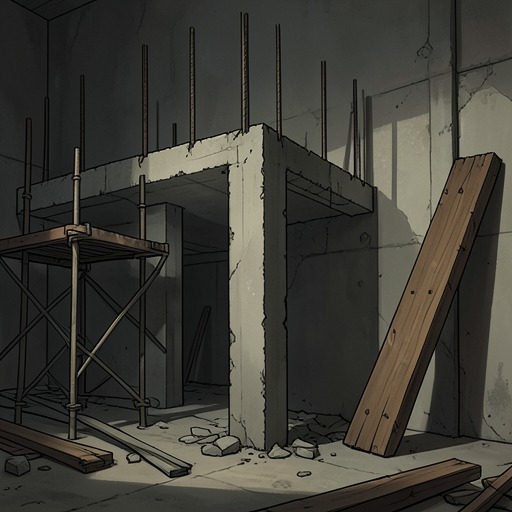
The unfinished tunnel beneath Indianapolis gives the company’s record a physical afterlife. When Aza and Daisy later walk toward the tunnel, they follow a small creek into a concrete passage where sewage and rot are immediately perceptible. The site is not presented as a completed solution to the river’s pollution but as an incomplete piece of the infrastructure meant to address it. The project’s failure can be encountered as a place, not only read as a budget or contract dispute.
At the tunnel’s concrete basin, Daisy wonders whether the project will ever be finished. Aza hopes the place will still be accessible years later, while Daisy bitterly connects its striking view to Russell Pickett’s corruption and incompetence. Their exchange preserves the contradiction at the heart of the company’s role in the novel: the unfinished work is evidence of civic failure, yet the neglected structure has become a place the girls value. Pickett Engineering’s significance rests in that tension between a promised public repair and the visible, lived consequences of leaving the work incomplete.